
Apple storage projects are often discussed too late. During harvest, growers may try to cool warm fruit in a room designed only for pre-cooled stock. That leads to slow pull-down, uneven temperature, and pressure to sell early.
An autumn storage plan should begin with the variety, harvest volume, incoming fruit temperature, and intended sales window. Those facts determine whether the project needs a standard cold room, rapid pre-cooling, several temperature zones, or controlled-atmosphere storage. This guide explains the decisions a buyer should settle before asking for equipment prices.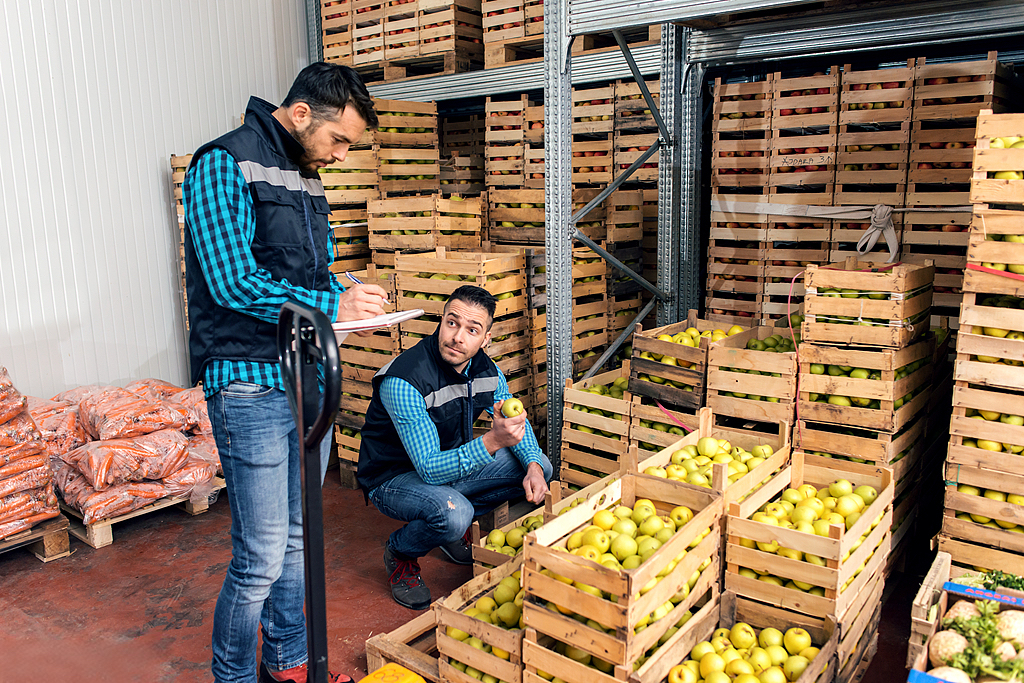
The sales date shapes the system. Short local holding differs from an exporter’s plan to supply fruit for many months.
A conventional cold room controls temperature and humidity in normal air. It suits shorter storage when the variety and market plan allow. Controlled-atmosphere storage also regulates oxygen and carbon dioxide in a gas-tight room. Longer storage must justify the sealing, gas controls, monitoring, and investment.
Do not choose controlled atmosphere simply because it sounds advanced. Fruit condition at harvest still limits the outcome. Ask the agronomist, buyer, or post-harvest specialist to define the storage protocol for each cultivar before refrigeration equipment is selected.
|
Project choice |
Suitable situation |
Main design input |
Common buying error |
|
Normal air cold room |
Shorter storage and regular dispatch |
Variety and expected holding time |
Assuming every apple stores equally |
|
Several cold room zones |
Mixed varieties or delivery dates |
Separate temperature programs |
Mixing incompatible batches in one room |
|
Rapid pre-cooling |
Warm fruit and fast intake |
Peak batch and pull-down time |
Asking the storage room to remove all field heat |
|
Controlled atmosphere |
Longer planned storage |
Cultivar gas and temperature protocol |
Pricing the room before defining the sales window |
Many apple programs operate near 0°C, but that figure is not safe for every cultivar. Some varieties are more vulnerable to chilling injury and may require a higher setpoint or a staged cooling program. The correct setpoint should come from the variety-specific post-harvest specification used in the destination market.
Fruit pulp temperature shows whether the load has cooled. Place probes in representative bins, not only near the evaporator. A wall sensor may report a cold room while tightly packed fruit remains warm.
Size for the warmest realistic harvest day. Provide daily tonnes, peak batch, orchard and target pulp temperatures, and pull-down time. Focusun’s cold storage and delivery guide explains why workflow matters alongside room dimensions.
Apples lose water during storage. Low relative humidity increases weight loss and shriveling, so many storage programs aim for high humidity. Yet simply adding moisture is risky. Condensation on fruit, panels, ceilings, or packaging can encourage decay and create sanitation problems.
A large temperature difference between room air and the evaporator can remove more moisture. Leakage, defrost, exposed fruit, and open doors also change the balance. Ask how the coil, airflow, drainage, and doors support the required humidity.
Measure humidity at representative locations and inspect the fruit. Calibrate sensors before the season and investigate sudden changes before adding moisture.
Room cooling can be slow when warm fruit arrives in large bins with limited airflow. Forced air directs cold air through packages. Hydrocooling suits selected products, while vacuum cooling works best with porous produce rather than every apple variety.
Can the room cool peak intake without warming stored fruit? If not, add pre-cooling, stagger intake, or use a pull-down room. Focusun’s vacuum cooling guide explains suitable products, and its vacuum cooler range supports mixed produce planning.
Pre-cooling capacity should follow the packing-house rhythm. Record bin size, stacking pattern, batch weight, loading time, and dispatch schedule. A technically powerful system still creates a bottleneck if doors, aisles, and forklifts cannot move fruit through it.
Cold air needs a return path. Bins against walls, tall pallets, and cartons blocking evaporator discharge create warm pockets. Preserve wall, ceiling, supply, and return clearances.
Air velocity must cool without excessive dehydration. Review package vents, bins, stacking, room height, and evaporator throw. During commissioning, test several locations with a loaded room. An empty-room test cannot prove even fruit cooling.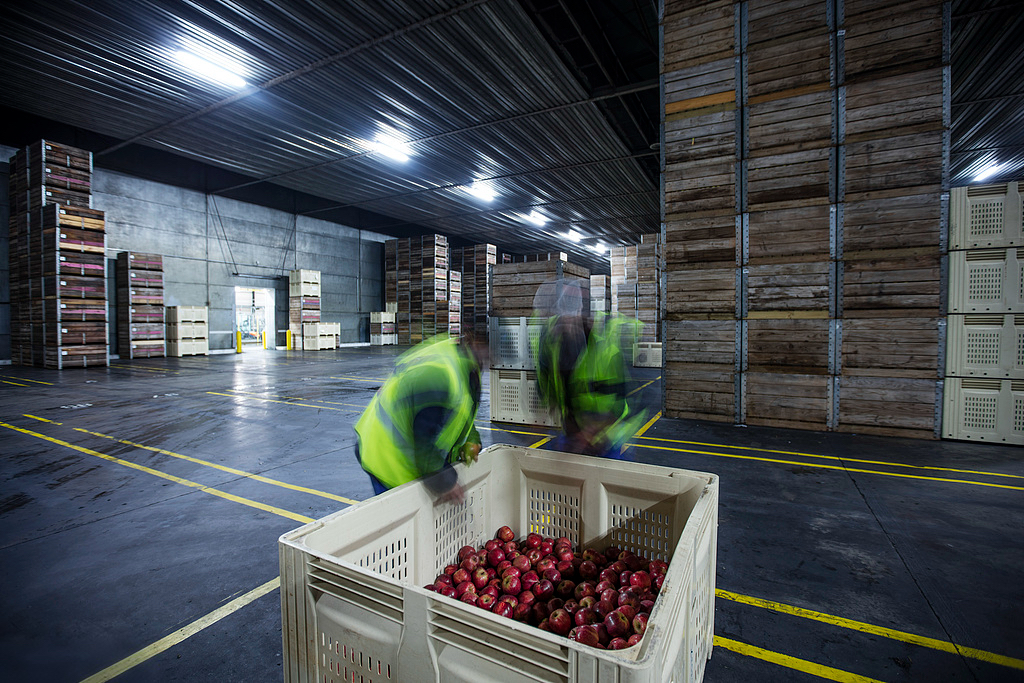
Apples produce ethylene as they ripen. Mixing them with ethylene-sensitive produce can shorten the storage life of the other crop. Different apple varieties may also require different temperatures, atmospheres, and dispatch dates.
Use separate rooms or zones when compatibility is uncertain. Exclude damaged fruit, clean bins, and rotate stock. Controlled-atmosphere rooms also require gas-tight construction, monitoring, procedures, and restricted-entry controls.
Commissioning during harvest leaves little time for corrections. Clean the room and bins, inspect joints and gaskets, test fans and defrost, calibrate sensors, confirm alarms, and run the system before delivery.
With weak grid power, a solar-powered cold room or hybrid may support remote storage, but must cover nights, cloudy periods, starting current, and backup. A containerized cold room can shorten seasonal site work.
Provide apple varieties, harvest dates, daily and peak intake, initial and target pulp temperatures, pull-down time, storage duration, dispatch pattern, bin dimensions, stacking plan, room size, local summer and autumn conditions, available power, and required backup. State whether the project needs normal air, several zones, pre-cooling, or controlled atmosphere.
Ask the proposal to show capacity at site conditions, evaporators, airflow, insulation, floor, doors, defrost, drainage, controls, humidity strategy, installation, and commissioning. The walk in cooler guide adds a checklist. Send the brief through the Focusun contact page.
Many apple varieties are stored close to 0°C, but the correct temperature depends on the cultivar, harvest maturity, storage period, and market protocol. Chilling-sensitive varieties may require a warmer setpoint or staged cooling. Confirm the specification for each variety before filling the room. Monitor fruit pulp temperature as well as room air because the centre of a bin cools more slowly. A supplier should size the refrigeration system from the incoming fruit temperature, peak daily load, required pull-down time, and selected storage temperature.
Apple rooms commonly operate at high relative humidity to limit water loss and shriveling, often around 90 to 95 percent when the crop protocol allows. The exact target depends on variety, packaging, airflow, and storage duration. High humidity must not create persistent condensation on fruit or building surfaces. Coil temperature difference, defrost, door leakage, and humidification all affect the result. Use calibrated sensors in representative parts of the room and inspect fruit condition regularly rather than relying on one reading beside the evaporator.
Storage life varies widely by cultivar, maturity, fruit condition, temperature stability, humidity, and disease control. A normal-air cold room can support shorter or medium marketing periods, while controlled-atmosphere storage is often considered when sound fruit must be held for several months. Do not use a generic month count as the design basis. Define the intended release schedule and obtain a variety-specific storage protocol. The room must also cool incoming fruit quickly enough; delays at harvest can reduce the useful storage window even if later temperature control is good.
Apples should enter controlled storage promptly, but the suitable cooling method depends on harvest temperature, batch size, packaging, and room capacity. A storage room may cool a modest load of well-vented bins yet struggle when a large warm harvest arrives at once. In that case, forced-air cooling, a separate pull-down room, or another suitable pre-cooling method can protect existing stock and shorten cooling time. Calculate from the peak daily intake and target pulp temperature, then confirm airflow through the actual bins before choosing equipment.
Controlled-atmosphere storage can be worthwhile when the sales plan requires longer holding and the apple variety responds well to a defined oxygen and carbon dioxide program. It costs more than normal cold storage because the room must be gas-tight and needs gas control, monitoring, safety procedures, and trained operation. Compare the added investment with expected storage duration, crop value, market timing, and annual throughput. CA storage cannot repair bruised, over-mature, diseased, or slowly cooled fruit, so harvest quality and fast temperature control remain essential.
They can share a room only when their temperature, humidity, atmosphere, maturity, and planned storage periods are compatible. Chilling-sensitive varieties may need a warmer setpoint, while long-storage fruit may require a different atmosphere or dispatch schedule. Mixing batches also complicates stock rotation and can spread decay. Before combining varieties, compare their post-harvest protocols and loading dates. Separate rooms or zones are often easier to control for a packing house handling several cultivars, especially when customers require different delivery windows or quality specifications.
Start with peak tonnes entering each day, fruit temperature at reception, target pulp temperature, and allowed cooling time. Add heat entering through the insulated envelope, doors, lights, people, fans, forklifts, and defrost. The calculation should use operating hours and equipment performance at the site’s ambient condition. Storage tonnage alone is never enough for sizing. Two rooms holding the same inventory can need different refrigeration capacity if one receives warm fruit quickly and the other receives pre-cooled fruit in smaller daily batches.
Shriveling usually indicates moisture loss. Common causes include low relative humidity, excessive air velocity across exposed fruit, a large evaporator temperature difference, long storage, damaged packaging, frequent door opening, or delayed cooling after harvest. Check calibrated humidity readings, coil operation, defrost, door seals, airflow paths, and package condition. Do not add uncontrolled moisture before finding the cause because wet surfaces may increase decay risk. Review weight loss by batch and location to identify whether the problem affects the whole room or a specific airflow zone.
Yes, when the solar and refrigeration systems are sized for the real cooling load. Holding pre-cooled apples requires less peak capacity than pulling down a warm harvest, so the operating plan matters. The design must cover night operation, cloudy-day autonomy, battery limits, compressor starting current, defrost, fans, controls, and backup power. In many projects, a hybrid arrangement is more practical than solar alone. Provide hourly loading and temperature data so the supplier can model when cooling demand occurs, not only the room’s daily energy total.
Provide varieties, harvest dates, daily and peak intake, incoming and target pulp temperatures, required cooling time, intended storage period, dispatch schedule, bin size, stacking layout, room dimensions, local ambient conditions, and power supply. State whether you need normal air, multiple temperature zones, rapid pre-cooling, or controlled atmosphere. Include site photos and access details. Ask the supplier to identify design assumptions, refrigeration duty, airflow, insulation, humidity control, doors, floor, drainage, alarms, backup power, installation, and commissioning scope so competing prices can be compared fairly.
